
Keep Food Safe When Cooling Suddenly Stops
A refrigerator that feels warm, runs all the time, or starts making strange noises needs prompt attention. In Houston's late-summer heat, cooling problems can become obvious fast because your refrigerator has to work harder to hold safe temperatures. The compressor is the part that helps circulate refrigerant through the system, allowing the appliance to remove heat and keep food cold.
When the compressor struggles or fails, the temperature inside the refrigerator can rise above 40 degrees Fahrenheit, putting perishable food at risk. We help Houston households sort out serious cooling problems with same-day residential appliance service, so you can get clear answers before spoiled food, leaks, or added appliance damage create a bigger disruption.
Early Signs Your Compressor May Be Failing
Inconsistent cooling is often one of the first warning signs. The fresh-food section may feel warmer than usual while the freezer has trouble keeping frozen foods solid. You may notice milk going bad sooner, ice cream turning soft, or produce losing freshness more quickly than expected.
A compressor that is no longer circulating refrigerant effectively may cause these changes, but it is not the only possible cause. Several electrical and mechanical parts can create similar symptoms, which is why we recommend professional testing instead of assuming the compressor is the problem.
Pay attention if you notice any of these changes:
- The refrigerator runs for long periods without reaching the set temperature
- The freezer is less cold than normal or food begins to soften
- The appliance clicks, buzzes, rattles, or repeatedly tries to start
- The back or bottom of the refrigerator feels unusually hot
- Cooling stops completely in one or both compartments
A low hum can be normal. Repeated clicking or loud buzzing is not something to ignore, especially when it comes with poor cooling. Those sounds may point to a compressor problem, but they can also come from a start relay, capacitor, wiring issue, or another component.
If the temperature is rising, move perishable food to a cooler or another working refrigerator as soon as you can. Repeatedly unplugging and restarting the appliance may put more strain on its parts, so it is better to leave diagnosis to a trained technician.
Why Houston Heat Can Expose Compressor Problems
August heat and humidity can place extra demand on a refrigerator. Every refrigerator must release heat through its condenser area, and that job gets harder when the kitchen, garage, or utility room is already hot. A compressor that has been under strain for a while may run longer, overheat, or finally stop working when outdoor temperatures stay high.
Airflow around the appliance matters, too. Dust buildup, blocked vents, cramped placement, and nearby heat sources can trap warmth where the refrigerator needs room to release it. These conditions do not always cause a compressor failure by themselves, but they can make an existing weakness easier to spot.
We often check for conditions such as:
- Limited space around the refrigerator's exterior
- Boxes or stored items blocking vents
- Condenser areas that cannot release heat well
- A refrigerator placed close to an oven or sunny window
- Fan problems that prevent proper airflow
Keeping space clear around vents is a simple way to avoid trapping heat around the unit. Still, when a refrigerator is already warm or noisy, airflow alone may not be the full answer. A trained technician can determine whether the problem is a fan, relay, thermostat, dirty condenser area, or a true compressor concern.
How Professionals Confirm a Compressor Failure
Before we label a compressor as failed, we check the refrigerator's basic operation. That includes interior temperatures, door seals, airflow, fan performance, and condenser conditions. We may also inspect the evaporator frost pattern, which can offer clues about how refrigerant is moving through the system.
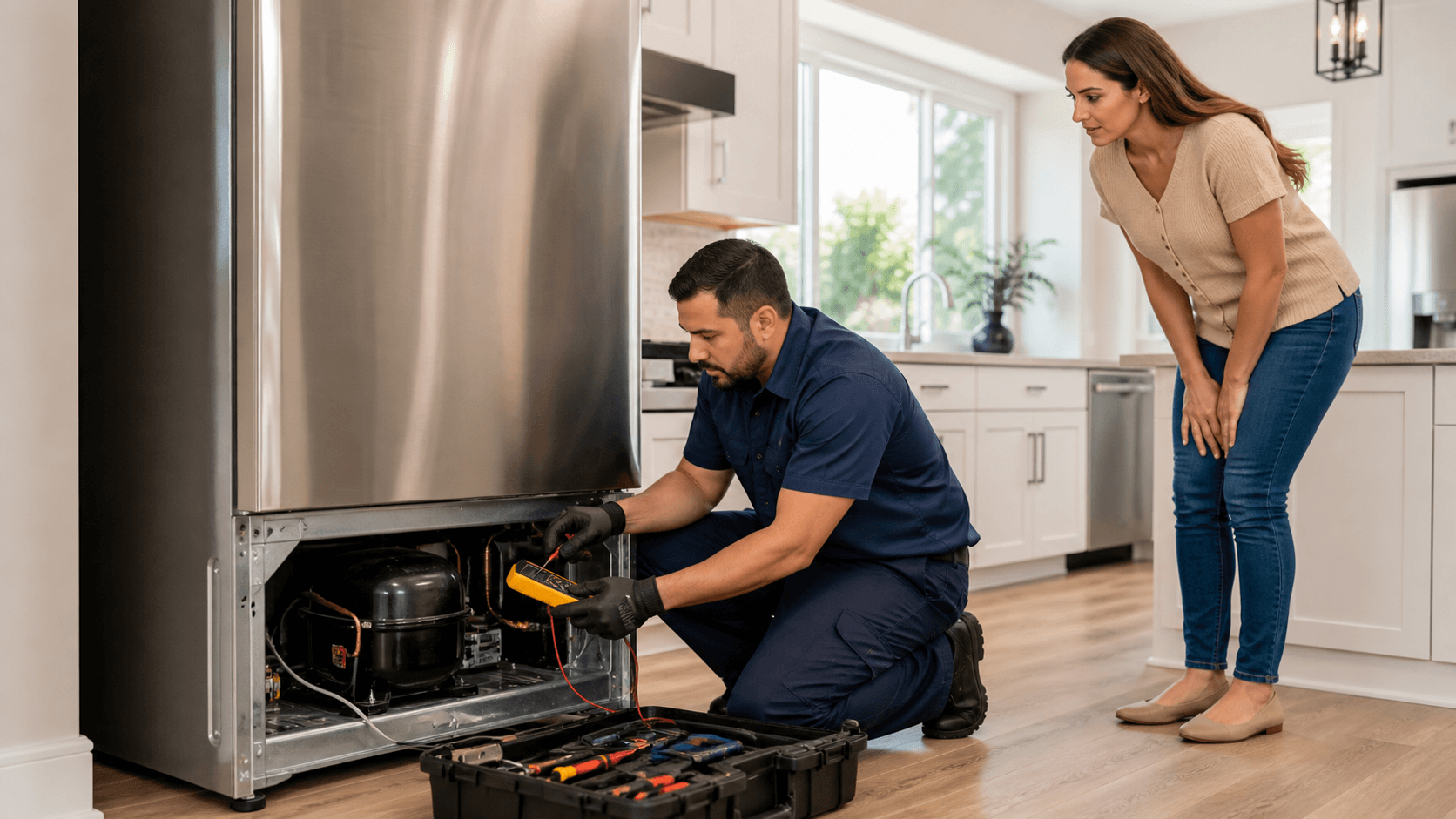
Electrical testing is another important part of the process. A refrigerator that clicks but will not start may have a failed start device rather than a bad compressor. Testing the relay, overload protector, capacitor, wiring, and compressor windings helps us identify the right source of the trouble.
That careful approach matters because compressor work involves a sealed refrigeration system, refrigerant handling, and specialized equipment. Repairing a failed refrigerator compressor is not a typical DIY project, and replacing a major part without confirming the diagnosis can leave the original problem unresolved.
Once testing is complete, we explain what we found in plain language. Our technicians service major refrigerator brands and can help you understand whether the compressor is the issue or whether another repair may restore normal cooling.
Repair or Replace for Long-Term Value
A confirmed compressor problem does not automatically mean replacement is the only path. The best choice depends on the refrigerator's age, overall condition, repair history, energy use, warranty status, and whether other parts are showing signs of wear.
A newer refrigerator that has otherwise been dependable may still be a reasonable candidate for compressor repair. On the other hand, an older unit with worn door seals, rust, repeated breakdowns, or several failing components may be nearing the end of its useful life.
Before a service visit, it helps to have a few details ready:
- The refrigerator's model number
- The approximate purchase date
- Any warranty information you have
- A description of the sounds or cooling changes
- Notes about when the problem first appeared
Those details can help us narrow down the issue faster and give you a clearer picture of your options. Restoring cold storage quickly is especially important during Houston summers, when food can warm up fast after a refrigerator stops cooling.
Protect Your Food and Act on Warning Signs
Warm compartments, constant running, repeated clicking, and unusual compressor noises are all signs worth taking seriously. Prompt diagnosis can reveal whether the compressor has failed or whether a smaller electrical or airflow-related part is causing the trouble.
Until the appliance is checked, keep a close eye on food temperatures and move perishables if the refrigerator is no longer staying cold. Fast action can help protect your food, limit further strain on the appliance, and make the next decision about repair or replacement much clearer.
Restore Reliable Cooling With Professional Help
Top Appliances Repair can assess the source of the problem and provide dependable refrigerator compressor failure repair tailored to your appliance. Our technicians can explain the findings clearly and help you understand the available repair options. To arrange service, contact us today.