Keep Your Food Safe When Freezing Fails
A freezer that suddenly stops freezing needs attention fast, especially during Houston's late-summer heat and humidity. Food can begin thawing sooner than expected after a malfunction, power interruption, or door left open too long. Keeping the door closed as much as possible can help slow down temperature changes while you figure out what is wrong.
Some freezer problems have a simple cause, while others point to a part that needs trained repair. At Top Appliances Repair, we provide same-day residential appliance repair throughout Houston for major freezer makes and models. Below, we explain the common causes we see, from blocked airflow and wrong settings to dirty coils, worn door seals, frost buildup, and failing mechanical parts.
Rule Out Simple Freezer Problems First
Start with the temperature control. A freezer should generally be set to 0 degrees Fahrenheit. It is easy for a dial to get bumped during cleaning, or for a digital setting to change while you are loading groceries or adjusting refrigerator controls nearby. Give the appliance time to respond after correcting a setting, but do not ignore food that is already softening.
Storage can also affect how well cold air moves. A freezer packed wall to wall may block the vents that send cold air through the compartment. Yet a nearly empty freezer can lose cold air faster when the door opens often. We recommend leaving open space around interior vents and keeping large packages away from the rear wall.
Door problems are another common reason for a freezer not freezing in Houston. Look for food packages that keep the door from closing fully. Then inspect the gasket, which is the flexible seal around the door edge.
- Close the door on a sheet of paper. If it slips out easily, the gasket may not be sealing tightly.
- Look for cracks, warping, food residue, or loose areas around the gasket.
- Avoid opening the freezer again and again while troubleshooting, since humid outdoor air can raise the inside temperature quickly.
Houston Heat and Humidity Add Extra Strain
September can still bring plenty of heat to Houston, and freezers feel that pressure. A unit in a garage, laundry area, utility room, or other warm space has to work harder to hold a safe temperature. Limited air space around the appliance makes the job even harder because heat cannot escape as easily.
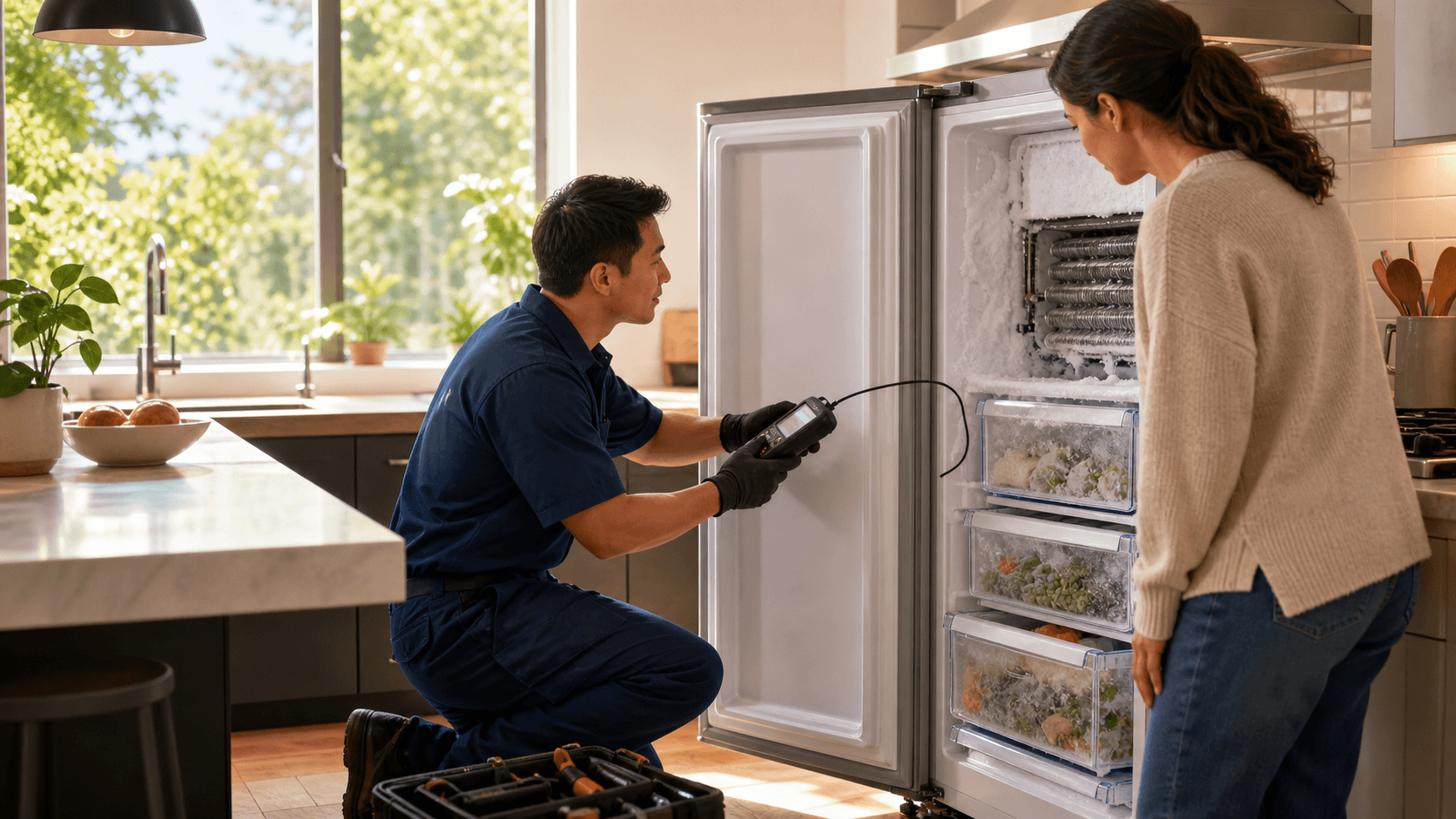
Humidity creates a separate problem. Each time warm, moist air enters through an open door or damaged gasket, moisture can collect and freeze on interior surfaces and evaporator coils. Heavy frost can block airflow, so the freezer may feel cool but still fail to reach the temperature needed to keep food solidly frozen.
Storm season also brings power concerns. During an outage, a full unopened freezer may keep food safe for about 48 hours, compared with around 24 hours for a half-full one. We suggest keeping the door shut, using an appliance thermometer when possible, and checking the freezer closely once power returns. If it does not recover and hold temperature, it may have a problem beyond the outage itself.
When a Failing Part Is to Blame
A freezer can sound like it is running without actually freezing well. One possible cause is an evaporator fan that is not moving cold air through the compartment. You may notice warmer shelves, uneven temperatures, strange fan sounds, or food near the door thawing while the back area remains somewhat colder.
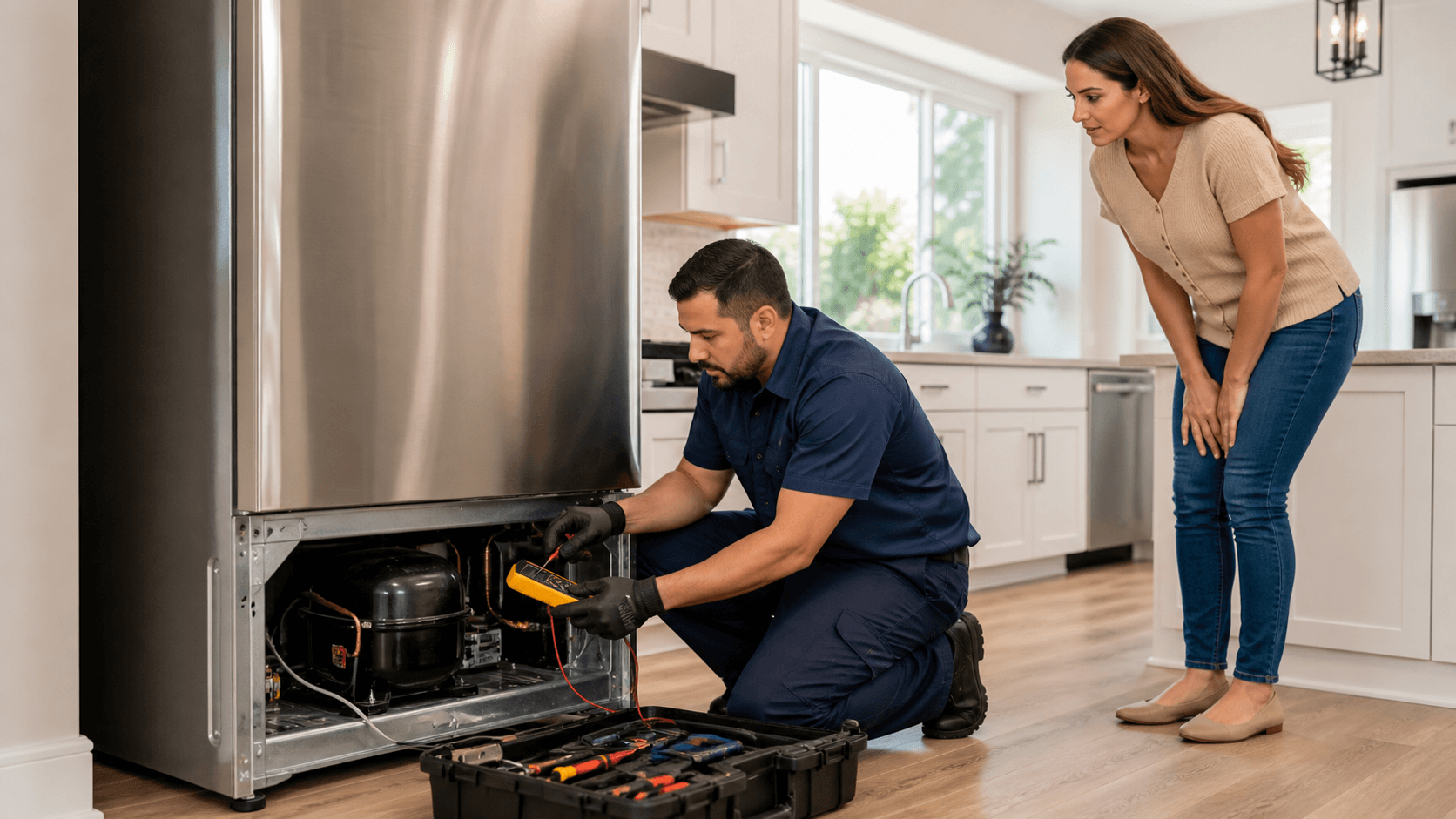
The refrigeration system also depends on parts near the back or bottom of the appliance. Dust-covered condenser coils can make heat removal harder. A faulty start relay, capacitor, or compressor can stop the system from cooling properly. Common warning signs include constant running, repeated clicking, unusual heat near the rear of the unit, or a freezer that turns on and off without getting cold enough.
Defrost-system trouble can cause frost to build behind interior panels, where it may block airflow out of sight. The cause could be a failed defrost heater, thermostat, sensor, or control board. Removing visible frost may briefly improve cooling, but the same issue often returns when the failed part is still in place. We recommend professional diagnosis instead of trying to access electrical parts, hidden wiring, or sealed refrigeration components.
Protect Your Freezer Before Holiday Hosting
Fall is a smart time to pay attention to freezer performance. Many Houston households depend on extra freezer space for bulk groceries, game-day foods, make-ahead meals, holiday desserts, and gatherings later in the year. A small problem in September can become much more stressful when the freezer is packed for Thanksgiving or end-of-year celebrations.
A few basic checks can help you spot trouble early:
- Vacuum accessible condenser coils and clear dust from nearby vents.
- Check that the appliance sits level and has several inches of open space around it.
- Inspect the door gasket for damage and make sure food packages are not preventing a full closure.
- Pay extra attention to garage freezers, since heat can add wear to cooling components.
Prompt service is a good idea when your freezer cannot maintain 0 degrees Fahrenheit, develops recurring frost, runs continuously, leaks water, clicks, grinds, or leaves food partly thawed. These signs can point to airflow, defrost, electrical, or refrigeration-system trouble that will not improve on its own.
Act Quickly to Limit Food Loss
When basic checks do not restore normal freezing, same-day professional service can help address thawing food, excess frost, and unsafe temperature swings before more stored items are affected. Our trained technicians diagnose major freezer makes and models, including problems involving fans, thermostats, door seals, defrost systems, compressors, and electrical components.
Until the freezer is working properly, keep the door closed, monitor food closely, and avoid assuming a cool-feeling compartment is cold enough. Fast attention can protect your stored food and help restore dependable cooling before Houston's heat and the busy holiday season put extra demand on your freezer.
Restore Reliable Freezing With Expert Help
Top Appliances Repair can diagnose the cause and provide dependable solutions for a freezer not freezing in Houston. Our technicians check key components, identify the underlying issue, and complete repairs with clear recommendations. To arrange service, contact us for prompt assistance.